Some albums slip quietly into your life. And some albums kick the door wide open. Construction Time Again did the latter. When friends recommended it to me in 1983, I had no idea I was about to step into the world of modern pop music for the first time. Looking back, it wasn’t just a recommendation. It was an initiation.
A friend had already handed me a mixtape earlier that year. A lovingly assembled collection of the defining tracks of the time, opening with Pop Muzik. That tape still exists, by the way, a tiny plastic time capsule of everything that was shifting in those early ’80s. But it was Construction Time Again that sealed the deal. That record made me a Depeche Mode fan. And I’ve stayed one ever since.
Of course, Everything Counts became the big single of the album, later a true hymn at live shows, a song that somehow grows larger every decade. But the album is far more than its hit. In many ways, it is a soundtrack to the “No Future” mood of the 1980s. It’s almost forgotten today that Depeche Mode have always wrapped sharp, critical lyrics in catchy melodies, from Speak & Spell onward. But that’s a story for another chapter.
The track that struck me the hardest back then was Two Minute Warning. It referenced the Doomsday Clock, which in those years felt like a real, ticking threat. The idea of “two minutes to nuclear catastrophe” wasn’t abstract. It slipped directly into my teenage room, into everyday thoughts, carried by that urgent, haunting melody. You didn’t need the evening news. The music told the story well enough. And it left a mark on me that still resonates today.
Construction Time Again is also often associated, thanks to its cover, with a kind of positive socialism. A sense of rebuilding. Given the state of the UK in the early 80s, that message was a statement in itself. Idealistic, maybe. But powerful.
Love, In Itself was, and remains, a deeply influential song for me. As a teenager, it was the first time I confronted the idea that love alone is not enough to solve everything. A subtle but profound shift in perspective at an age when life was beginning to expand beyond the fragile security of a not-quite-intact family structure. And then there were the versions: Love, In Itself.2 (7″ Mix), Love, In Itself.3 (the Maxi), Love, In Itself.4 (Lounge Version). Each one is a different lens on the same message. It was the age of maxi-singles, when bands still reinterpreted their own songs instead of handing them over to DJs. That alone felt like a whole education.
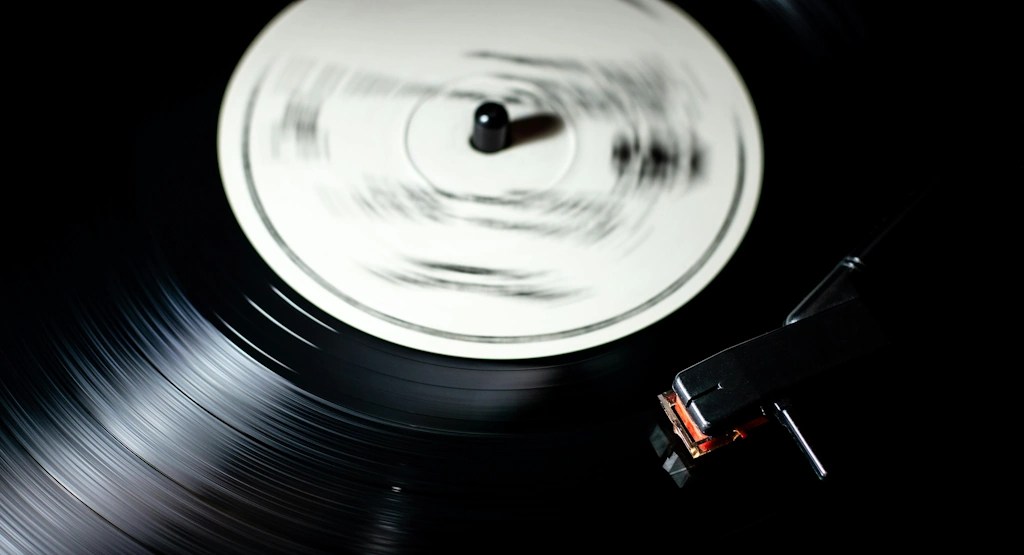
Side A ends, the needle lifts, you return the tonearm, and flip to Side B. That moment of quiet transition is still special. A breath, an anticipation, a tiny ritual. Each and every time.
Side A contains one of the most underrated Depeche Mode tracks ever: Pipeline. A mantra-like rhythm, perfectly capturing the monotony and weight of repetitive industrial labour. Hypnotic, understated, brilliant.
Side B opens darker, with the aforementioned Two Minute Warning. But the closing track, And Then…, offers something else entirely: hope. Even revolution.
“Let’s take a map of the world, tear it into pieces.” A line that feels more urgent today than it ever did.
“All that we need at the start’s universal revolution.”
A sentiment they would return to decades later in Where’s the Revolution on Spirit (2017). Another echo across time.
Construction Time Again wasn’t just my first Depeche Mode album. It was the one that set everything in motion: curiosity, identity, musical taste, and that quiet sense that music can be political, personal, and transformative all at once.
It still is.
Edited with the help of Grammarly

Leave a comment