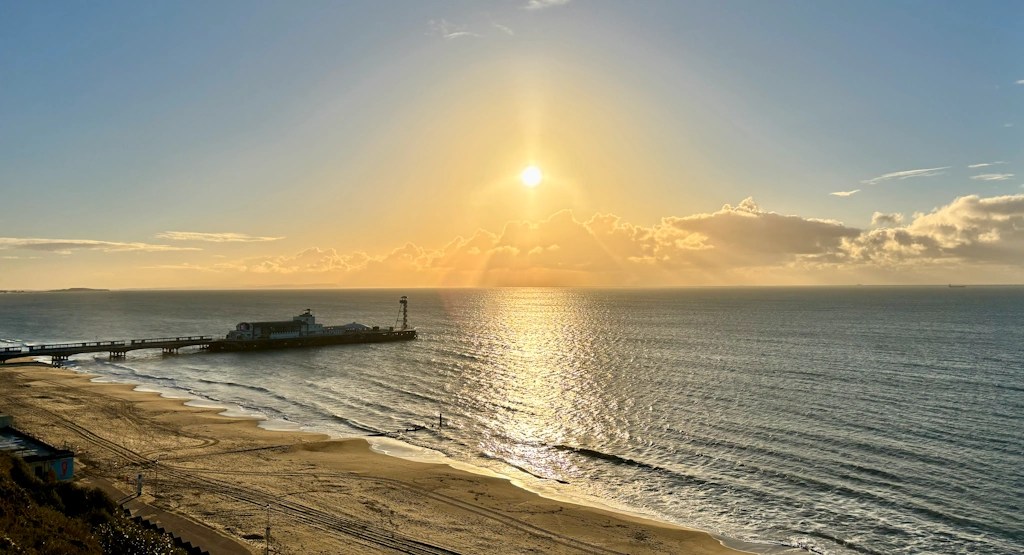
In October, I visited Bournemouth again, one of England’s seaside resorts along the Channel coast. The town still bears the scars of Britain’s economic decline and the competition from low-cost flights that send travelers to the Balearic Islands and the Canaries. As tourism decreased, local employment also declined, leaving visible effects.
During my first visit in autumn 2024, I could immediately sense the persistent resistance to structural change. Perhaps those who have seen a town decline before notice these signs more acutely. I experienced such a decline in the 1980s, and after witnessing that gradual fading, the signs become clear everywhere: cracks under new paint, empty storefronts, and small efforts to conceal deeper issues.
Visitors usually expect a seaside town to be well-maintained, lively, and charming. When it doesn’t meet these expectations, the typical response is frustration or disappointment. Nonetheless, this might be an ideal moment to rethink what travel truly means: to look beyond the surface and uncover the deeper realities of a destination.

This year, I visited Bournemouth for two concerts: Adam Ant, whose show was postponed from the previous year, and an evening with Rick Wakeman. The concerts themselves deserved separate posts, but the walks through a town that’s still figuring out who it wants to be. Those are part of this story.
Which brings me back to the question that followed me throughout my stay: What happened to Bournemouth?
Was it really just the politics of the 1980s and the collapse of British industry that swept over the coastal towns like a cold front? Or is it the simple math of cheap flights, that a weekend on a British promenade now costs more than three days in the Spanish sun?
The visual appeal of the pier, the small Ferris wheel, and especially the Oceanarium is modest. The Oceanarium, in particular, feels somewhat out of place in 2025. It is too small, too gentle, as if trying to preserve a past when such attractions still sparked wonder. Today, it feels more like a friendly relic.
The Bournemouth Gardens, however, remain a pleasant surprise: a long green ribbon running through the town, inviting you to slow down. And then there’s the beach. Unassuming at first glance, but full of quiet strength. I’ve always felt drawn to the sea, and Bournemouth’s coastline has a certain pull I can’t quite explain.
Maybe that’s why the opening of “I Am the Sea” by The Who hits me so deeply. There’s a hidden question in that song. A desire to be seen for who you really are. Standing by the water, with the wind pushing against me, that question comes up again. The sea has a way of stripping things away: it calms, but it also challenges. It asks who you are beneath all the things you pretend to be.
Maybe that connection runs deeper because of Quadrophenia, a film that has been one of the most important in my life, shaping my emotional development as a teen and staying with me ever since. It doesn’t matter that the film reaches its emotional peak and collapse in Brighton, not Bournemouth. The place is secondary. The sea is the true constant. It carries the same force, the same longing, the same unrest. And every time I stand at the water’s edge, something of that feeling comes back.
To me, Bournemouth feels caught in the middle of a transition, though to what, no one seems to know. What options does a seaside town have today? Especially when competing with so many others along the Channel coast, all fighting for the same visitors.
I enjoyed my time in Bournemouth. However, there were moments that confused me: shops closing as early as 5:30 p.m., the empty storefronts in the pedestrian zones, the cluster of £1 stores. Maybe Bournemouth is different in summer. Brighter, livelier, more confident. I don’t know. Perhaps I should just come back one day when the days are longer and the sea feels a little warmer.
Edited with the help of Grammarly

Leave a comment