It took me months to finish this article. The emotions of January were still shifting, still settling and I needed clarity in both heart and mind before I could put them into words.
The Pacific Northwest, or simply PNW, has held a special place in my heart ever since I fell in love with the region in the mid-90s. I wrote about this connection in my 2024 post, aiming to capture what this landscape does to me: its quiet gravity, its spirit, and its sense of belonging.
This year’s initial visit stood out as being different. It was not louder or more impressive, but deeper, more peaceful, and introspective. I had temporarily disconnected from online life out of necessity, retreating into myself to prioritize my mental health. This journey wasn’t about checking off tourist spots or chasing sunsets; it was about immersing myself in genuine solitude. I opted for a cozy home in West Seattle instead of a hotel, a place where silence wasn’t something to run from but something to embrace.
The last time I wrote about the PNW, I did so in the early days of my chemotherapy for lymphoma. Only now, looking back, do I understand how much the medication was already shaping me: emotionally, physically, subtly eroding my confidence. In 2024, I developed a sudden fear of heights. A strange companion for someone who had once loved high viewpoints and seaplane flights. Returning to the Space Needle became a quiet personal trial. And I passed. The fear isn’t entirely gone, but I can stand steady again. I can look down at the city without losing myself.
Before that challenge, though, something unexpected happened. I visited Chihuly Garden and Glass, an exhibition I had overlooked for years and one that caught me completely off guard. I walked in, unaware that I was about to be overwhelmed.
The glass sculptures have such a gentle presence, almost like they breathe. They invite patience, space, and quiet reflection. I found myself slowing down naturally because I needed to. The shapes, the colors, the delicate, almost impossible fragility of it all… they didn’t just touch me. They opened me up completely. Suddenly, tears welled up, uncontrollable and raw. But it wasn’t sadness. It was something deeper. A sense of release, recognition, or maybe even relief. For a few quiet minutes, I just stood there, taking deep breaths, allowing everything I’d been holding inside to come rushing out. Chihuly Garden and Glass wasn’t just an exhibition that day. It felt like a mirror reflecting my own emotions.
A few days later, I stopped at Tweed’s Café. Maybe better known to the world as the Double-R Diner from Twin Peaks. It has become a pilgrimage site for David Lynch fans, and stepping inside felt strangely familiar, as if I had been there long before I ever set foot in the PNW. I am grateful I visited again this January. The warmth of the café, the mix of locals and devoted fans, the simple comfort of a slice of cherry pie, it all felt like stepping into a parallel version of my own nostalgia.
From there, I took a detour to Snoqualmie Falls. No matter how many photos you see, nothing can prepare you for the true sound: the roar of the waterfall blending with the wind whispering through the misty evergreens. It is a sound that doesn’t just stay in your ears; it settles in your chest. The entire scene, the fog, the towering firs, the relentless, ancient power of the water, felt like standing inside the heart of the PNW. At least for me. Since I first visited the Falls in 1995.
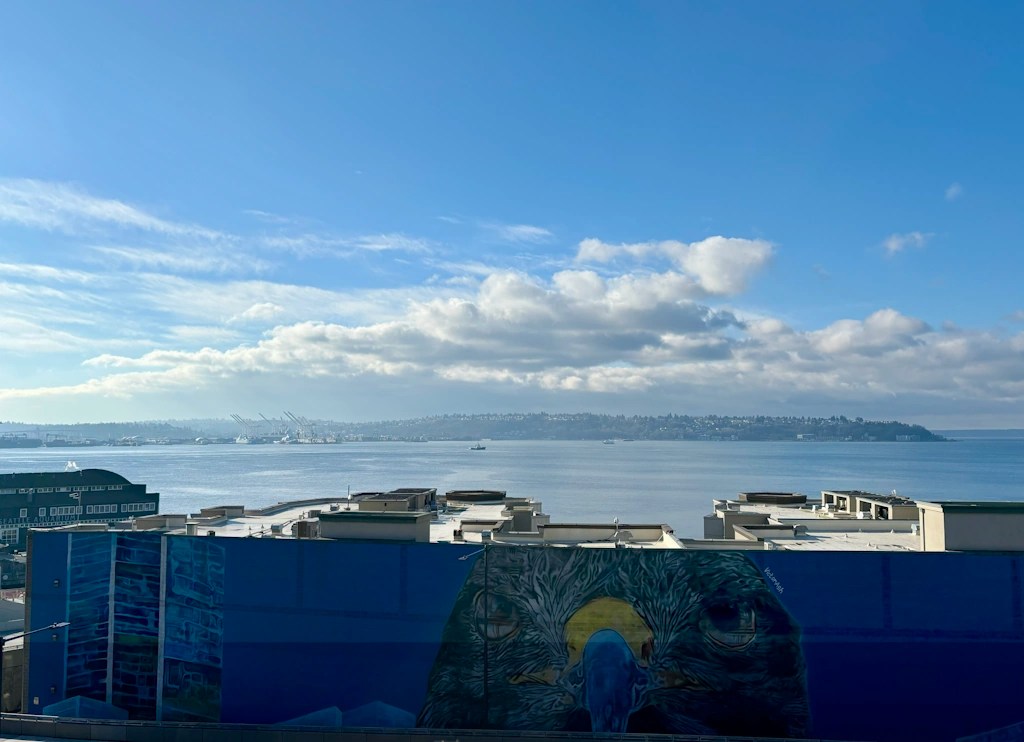
Before leaving the city, I spent time wandering along the newly reconnected Seattle waterfront. Only shortly before my visit, the transformation had been completed: a generous new park and a wide flight of steps now lead up toward the Pike Place Market. For decades, the double-deck state route 99, the Alaskan Way Viaduct, had severed the waterfront from the city. A concrete wall blocked what should have been Seattle’s natural heartbeat.
Now, everything flows again. The water, the people, the air.
Standing there, looking up at the market and back toward Elliott Bay, I felt something shift — not just in the skyline, but in the city’s relationship with itself. Seattle has always been a place in transition, a city constantly reinventing and rearranging itself. Not every change has been for the better. But this one… this one felt right. It felt like the city had reclaimed a part of its soul.
And then there was the moment at Alki Beach.
I did not know it then, but the farewell was already happening.
On my last day, I walked down to the shoreline. The waves of Elliott Bay were calm, rolling in with a rhythm that felt older than the city, older than any of my memories. I stood there, hands in my pockets, simply listening to the water and the faint hum of the city behind me. It felt peaceful. Light. Ordinary in the best possible way.
I thought it was just the end of a trip.
I did not realise it was the beginning of a long goodbye.
It was only later — much later — that the truth sank in.
The PNW has always been my spiritual anchor. There is a reason I carry a Coast Salish–style orca tattoo on my right forearm. For me, the region is more than geography; it is a mental refuge, a place where my heart recognizes itself. But today, the United States has become a country I can no longer travel to safely. The political climate is volatile, at times even life-threatening for people like me. Saying goodbye under those circumstances feels different — heavier, unresolved.
Maybe that is why the days in West Seattle felt so sacred. Quiet mornings. Slow afternoons. Long walks along the water. Moments where nothing happened, and yet everything did.
The visit to the Duwamish Longhouse Cultural Center deepened that impression. The center tells a history that is not in the past — exploitation, displacement, systemic injustice against Native Americans that continues into the present day. It is a heavy story, and yet the Longhouse radiates resilience, dignity, and a determination that the tide will turn, even if painfully slowly.
I hope, sincerely, that someday — however distant that future may be — I will return to the United States side of the PNW. Until then, I look northward. The Canadian part of the PNW carries the same spiritual pulse, even if its landscapes speak with a different accent. And in March 2026, I will ground myself there again. I am already looking forward to it.
Still, I miss the Puget Sound.
And the hum of a seaplane lifting off the water.
Some farewells echo longer than others.
Travel safe.
Edited with the help of Grammarly

Leave a comment