Losing a place is different from leaving it.
2025 was not a year of great distances. It was a year of inward movement. Of subtle shifts, of places that can no longer be reached, and of the things that endured.
The farewell to the Pacific Northwest runs through everything like a quiet fault line.
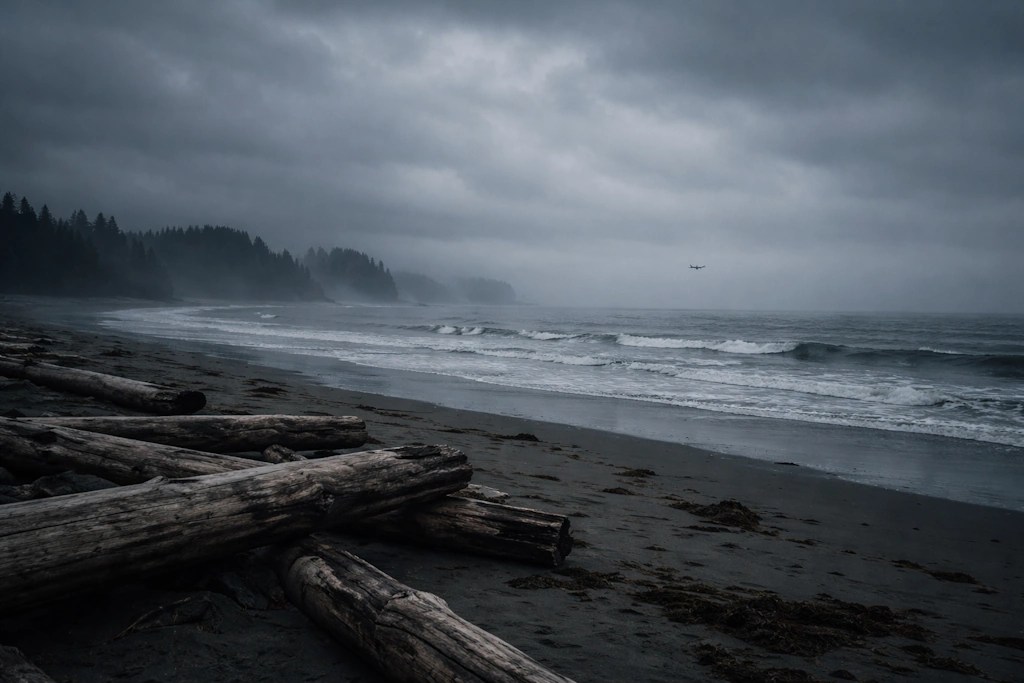
The PNW was never just a destination. It was an in-between world. Forest and wind, fog and rain, coast and sea. Lakes, waterfalls, that constant presence of sound, not loud, but deep. A base note. This landscape did not simply exist around me; it settled within me.
Only in leaving did I begin to grasp how deeply it had taken hold.
The weight and stillness of the forests. Rain that explains nothing and asks for nothing. The raw openness of the coast. Places that feel as though they sit slightly aside from reality. Perhaps it is the closeness to something like Twin Peaks, to myth, to the traces of the Coast Salish tribes. A sense of a mental in-between space where more exists than what can be seen. That is where a grounding point of my soul once lived.
And now that place has become unreachable.
Not by choice. Not through indifference. But, because recent developments in the United States make traveling there impossible for me. This is not an abstract concern, nor a political aside. It is a personal loss. A part of my inner map has been cut off. Not erased, but no longer accessible. This inner fracture has been with me ever since. Quiet, but persistent.
Whether Canada or British Columbia might offer something to hold on to next year remains to be seen.
Perhaps it will be different. Perhaps closer than I can imagine now. Perhaps not. This uncertainty, too, has become part of travelling.
Travel itself has grown more physically demanding.
Airports require more attention, more energy, more internal discipline. The sunflower lanyard gives me a measure of safety, not as a symbol, but as practical support. Even so, it is never the same everywhere. Some airports meet me with calm and understanding. Others make it clear just how fragile that sense of safety can be.
And still, I keep travelling.
Because there are anchors.
Music is one of them.
Not only the artificial, audible music that accompanies me, but also the sound of places themselves. Every place has its own music. Sometimes clearly heard, sometimes barely perceptible. Wind moving through trees. Rain on tarmac. The slow breathing of the sea. Sounds that are felt more than they are heard. They are always present. And often, without noticing, they bring order to inner noise.
I often wonder whether others experience this in a similar way.
Whether music, in all its forms, serves as an anchor for them, too. A quiet framework that holds the act of travelling together, even when nothing else feels entirely stable.
Perhaps this is the thread running through the year:
Not the places themselves, but what connects me to them. Sound. Memory. Meaning.
Bournemouth, Cardiff, airports, lounges, farewells. They sit side by side, without competing. All part of a year that speaks less of arrival than of the space in between.
In the end, there is no neat conclusion.
Only the realisation that travelling has become more of a balancing act than ever before. Between body and mind. Between what is possible and what is missing. Between loss and what still holds.
2025 was not an easy year to travel.
I am deeply thankful for what still holds.
Edited with the help of Grammarly.

Leave a comment